

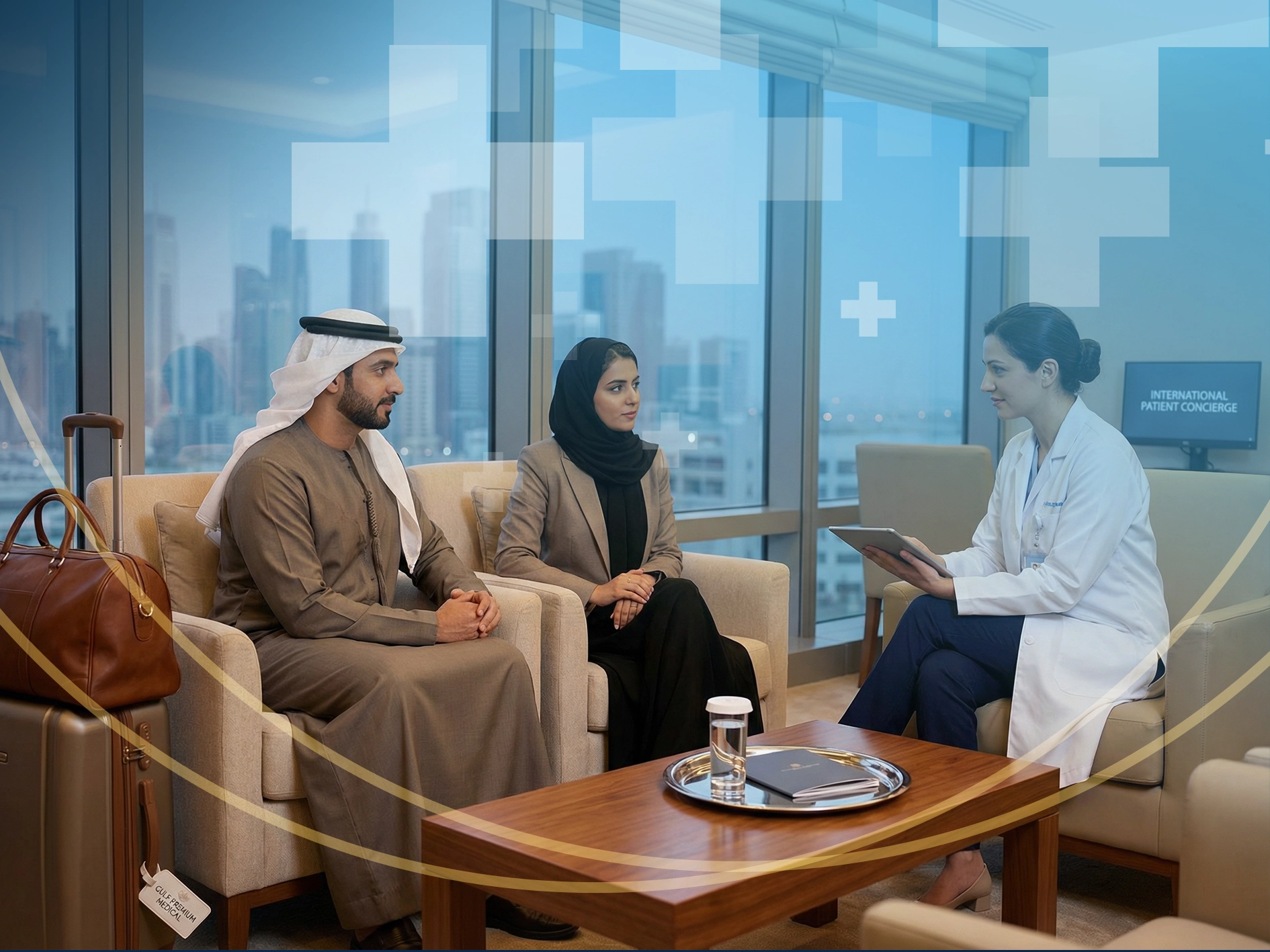
Medical tourism in the Gulf is entering a new phase. The traditional model—patients flying long distances for complex oncology and advanced therapies—is being challenged by a more efficient regional alternative. As demand for high-complexity care rises in the UAE and Saudi Arabia, proximity, clinical confidence, and operational reliability are becoming as important as brand reputation.
Muscat is emerging as a credible destination in this shift. With a single, high-spec biopharma and advanced-therapy facility capable of meeting international standards, Oman can capture regional patient flows that previously exited the GCC altogether. This article explains how medical tourism to Muscat can move from concept to execution—practically, operationally, and sustainably.
Why Is Medical Tourism Demand Rising in the GCC?
The UAE and KSA face a widening gap between demand for advanced therapies and available local capacity. Population growth, improved diagnosis rates, and expanding eligibility for cell and gene therapies are placing pressure on existing hospitals. Even where clinical expertise exists, manufacturing access, scheduling constraints, and treatment timelines remain bottlenecks.
At the same time, patients and referring clinicians are increasingly reluctant to accept long international travel when viable regional alternatives exist. The result is a growing preference for short-haul medical travel within the GCC, where regulatory familiarity, cultural proximity, and family support networks reduce friction.
Key demand drivers include:
- Rising incidence of oncology and rare diseases requiring advanced biologics.
- Limited domestic manufacturing access for CAR-T and complex therapies.
- Patient preference for faster treatment initiation and shorter travel windows.
- Government efforts to retain healthcare spending within the region.
Why Does Muscat Offer a Competitive Medical Tourism Advantage?
Muscat’s strength lies not in volume tourism, but in precision healthcare travel. The city’s geographic position allows efficient access from Riyadh, Jeddah, Abu Dhabi, and Dubai, while maintaining a calmer clinical environment suited to intensive therapies.
More importantly, Oman’s regulatory posture and infrastructure investments allow for a vertically integrated care pathway—from referral to infusion—within a controlled ecosystem. A single, high-spec facility reduces handoffs, minimizes logistics risk, and simplifies compliance across borders.
Muscat’s advantage is reinforced by:
- Stable air connectivity with major GCC cities.
- Visa facilitation aligned with medical travel needs.
- A regulatory environment supportive of advanced therapy manufacturing.
- Lower congestion and scheduling pressure compared to major hubs.
What Makes a Single High-Spec Facility Critical for Medical Tourism?
Medical tourism for advanced therapies fails when care is fragmented. Patients moving between hospitals, manufacturers, and logistics providers experience delays, data gaps, and quality risks. A centralized facility solves this by concentrating expertise, infrastructure, and accountability.
In Muscat’s case, a single high-spec facility enables:
- Consistent GMP-grade manufacturing and release processes.
- Direct coordination between clinical teams and production units.
- Reduced cold-chain exposure and transport complexity.
- Clear responsibility for quality, safety, and patient outcomes.
Rather than scaling across multiple sites prematurely, focusing on one flagship facility builds credibility faster and creates a repeatable model for regional referrals.
How Do Referral Pathways from the UAE and KSA Actually Work?
Medical tourism depends less on marketing and more on structured referral mechanisms. Successful flows begin with clinician-to-clinician trust, supported by clear eligibility criteria and predictable timelines.
A functional referral pathway typically includes:
- Pre-screening protocols aligned with GCC clinical standards.
- Digital transfer of patient records and diagnostic data.
- Defined turnaround times for eligibility confirmation.
- Coordinated scheduling for travel, admission, and treatment.
When these elements are standardized, referrals shift from ad hoc decisions to routine clinical practice, allowing patient volumes to grow without compromising care quality.
What Role Does Concierge Care Play in High-Complexity Medical Travel?
For advanced therapies, concierge services are not a luxury—they are operational infrastructure. Patients undergoing complex treatments require coordinated logistics that extend beyond the hospital walls.
Effective concierge care supports:
- Travel coordination aligned with treatment windows.
- Accommodation suitable for immunocompromised patients.
- Family support arrangements during extended stays.
- Post-treatment follow-up coordination with home clinicians.
By embedding concierge services into the care pathway, Muscat can deliver a seamless patient experience without distracting clinical teams from their core responsibilities.
How Does Quality and Compliance Shape Medical Tourism Credibility?
For referring clinicians and payers, quality assurance is non-negotiable. Medical tourism only scales when external stakeholders trust that care delivered abroad meets or exceeds domestic standards.
Credibility is built through:
- Transparent GMP and GDP compliance frameworks.
- Digital batch records and traceable manufacturing data.
- Clearly documented quality management systems.
- Alignment with GCC regulatory expectations.
These elements turn Muscat from an alternative option into a preferred destination for specific indications and therapies.
What Are the Most Common Questions from Referrers and Families?
Referrers and patients tend to focus on practical concerns rather than strategic narratives. The most frequent questions include:
- How quickly can treatment begin after referral?
- Who is accountable if delays or complications occur?
- How is patient data protected and shared?
- What happens after the patient returns home?
Addressing these questions proactively—through documentation, service design, and communication—removes uncertainty and accelerates adoption.
How Can Medical Tourism to Muscat Scale Without Overextension?
Sustainable growth requires discipline. Rather than chasing volume, Muscat’s model should focus on selective indication leadership and build depth before breadth.
A measured scaling approach includes:
- Prioritizing therapies with predictable demand and outcomes.
- Limiting intake to maintain quality and turnaround times.
- Expanding referral networks incrementally.
- Using real-world performance data to guide expansion.
This approach protects reputation while allowing capacity to grow organically.
Why Medical Tourism to Muscat Is a Strategic, Not Opportunistic, Play
Medical tourism is often treated as a branding exercise. In reality, it is a systems challenge that rewards precision over promotion. Muscat’s opportunity lies in offering a specific, reliable, high-quality service: advanced-therapy access within the GCC.
By combining a single high-spec facility, disciplined referral pathways, and operational clarity, Oman can capture regional patient flows that value speed, trust, and continuity of care. This is not about competing with global medical tourism hubs—it is about redefining regional healthcare mobility.
Conclusion
Medical tourism to Muscat represents a pragmatic evolution of GCC healthcare delivery. As advanced therapies become more common, proximity, reliability, and system integration will matter more than prestige. A focused, well-executed model anchored by a single high-spec facility allows Oman to serve UAE and KSA patients efficiently while reinforcing regional healthcare self-sufficiency.
This is how medical tourism moves from aspiration to infrastructure.