

Regional Biopharma Integration in the GCC: Why Oman and Saudi Arabia Form a Single Manufacturing Ecosystem
As biopharmaceutical manufacturing matures in the GCC, scale is no longer defined by individual national markets.
It is defined by regional integration.
In advanced industries, competitive platforms rarely operate in isolation. They are built across interconnected locations that specialize, reinforce one another, and share regulatory, commercial, and operational alignment.
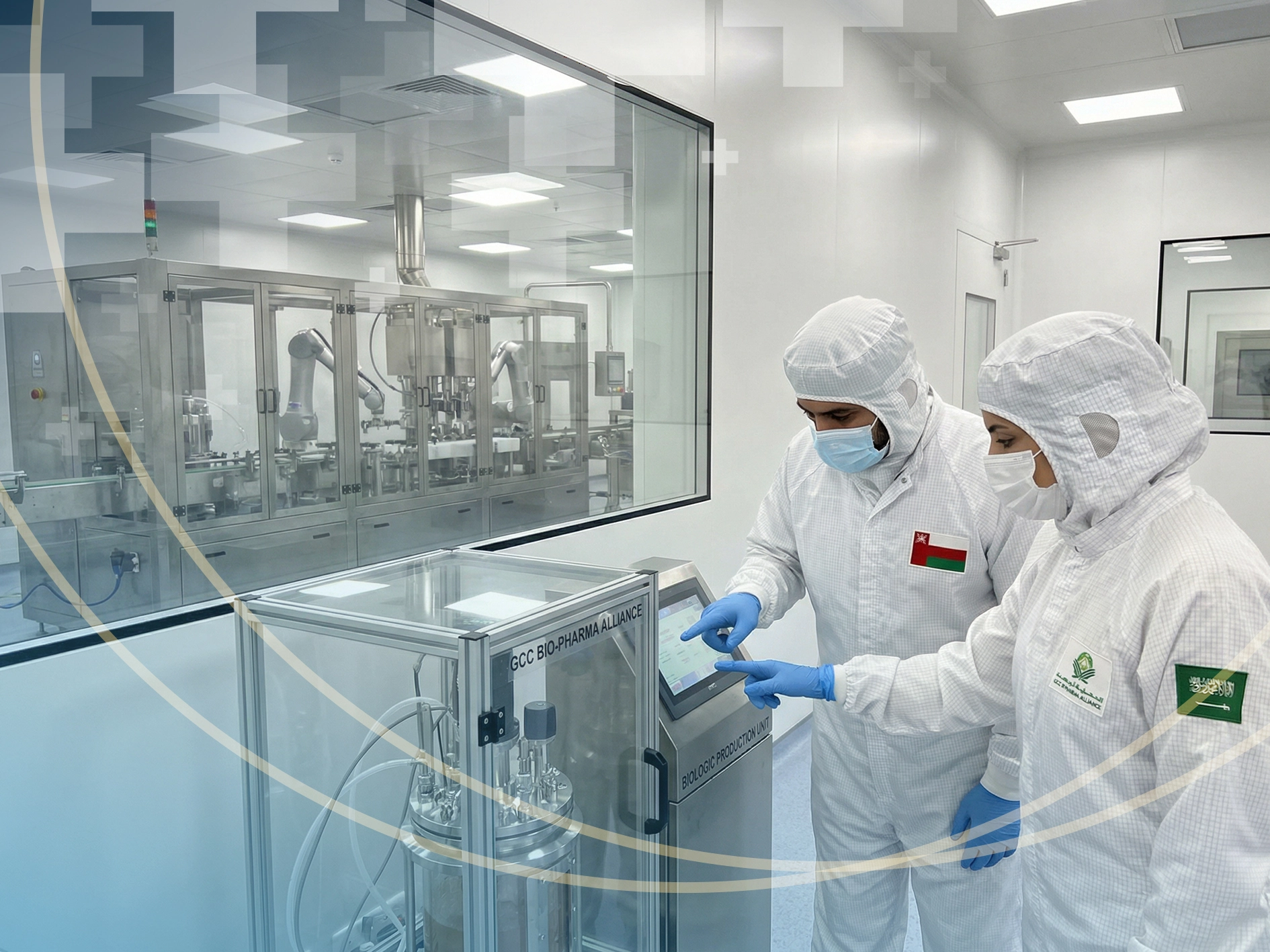
For biopharma in the GCC, Oman and Saudi Arabia increasingly function not as separate markets, but as a single, integrated manufacturing and commercialization ecosystem.
This regional logic is central to how scalable platforms such as Opal Bio Pharma position themselves for long-term growth.
Why National Silos Limit Scale
A purely single-country biopharma model faces natural constraints:
- Limited domestic demand relative to global markets
- Concentrated regulatory exposure
- Slower asset utilization
- Reduced negotiating power in procurement
While national localization remains important, platform economics improve dramatically when manufacturing, commercialization, and supply chains are designed at a regional level.
This is particularly true in the GCC, where healthcare systems, regulatory frameworks, and disease profiles are highly aligned.
Oman and Saudi Arabia: Complementary Roles in a Regional Platform
Rather than duplicating capabilities, an integrated GCC biopharma ecosystem benefits from specialization across locations.
In a regional platform model:
- Core biologics manufacturing and R&D can be anchored in one location
- Commercial-scale fill–finish and market access can be anchored closer to large demand centers
- Supply chains operate seamlessly across borders
Oman and Saudi Arabia naturally complement one another in this structure.
Together, they enable a balanced platform that combines efficient production with access to the region’s largest healthcare markets.
Saudi Arabia as the Demand and Commercial Anchor
Saudi Arabia represents the largest healthcare market in the GCC, driven by:
- Population scale
- Expanding healthcare infrastructure
- Increasing biologics adoption
- Strong policy focus on localization
For any biopharma platform, Saudi Arabia is the commercial gravity center.
Locating commercialization-facing infrastructure such as fill–finish and distribution close to this demand base improves:
- Market responsiveness
- Procurement alignment
- Cost efficiency
- Long-term partnership opportunities
Oman as a Strategic Manufacturing and Platform Base
Oman offers structural advantages for platform manufacturing and development:
- Efficient industrial zones
- Competitive operating economics
- Stable regulatory environment
- Long-term industrial planning
As part of a regional model, Oman serves as a foundation for:
- Core biologics production
- Advanced therapy development
- Early-stage and mid-scale manufacturing
This balance allows platforms to scale without over-concentrating risk or cost in a single geography.
Cross-Border Integration Drives Asset Utilization
One of the most powerful benefits of regional integration is improved utilization of capital-intensive assets.
By serving multiple GCC markets:
- Manufacturing capacity reaches optimal utilization faster
- Fixed costs are spread across higher volumes
- Margins improve structurally
This dynamic is critical in biologics and advanced therapies, where facilities require sustained throughput to maximize returns.
Regulatory Alignment Enables Seamless Expansion
The GCC is steadily progressing toward greater regulatory alignment in pharmaceuticals and biologics.
As standards converge:
- Cross-border approvals become more efficient
- Platform manufacturing can support multiple markets with minimal duplication
- Quality systems are leveraged region-wide
This regulatory harmonization strengthens the case for integrated regional platforms rather than fragmented national operations.
Risk Diversification Through Geographic Balance
Integrated platforms also benefit from geographic risk diversification.
By operating across Oman and Saudi Arabia:
- Regulatory risk is spread
- Supply chain resilience improves
- Operational continuity is strengthened
For investors, this reduces concentration risk while preserving exposure to the region’s largest markets.
Platform Economics at Regional Scale
At regional scale, biopharma platforms unlock:
- Stronger procurement positioning
- Better pricing power
- Greater attractiveness to global partners
- Expanded export potential
This transforms the business from a national manufacturer into a regional infrastructure asset.
Strategic Implications for Investors
For private capital, regional integration signals:
- Scalability beyond one market
- Institutional-grade platform thinking
- Long-term competitive defensibility
Rather than betting on isolated facilities, investors gain exposure to a system designed to grow with the region.
Opal Bio Pharma’s Regional Platform Logic
Opal’s platform approach is built around this integrated GCC model.
By aligning manufacturing, advanced therapies, and commercialization across Oman and Saudi Arabia, Opal positions itself to:
- Serve multiple markets efficiently
- Accelerate revenue ramp-up
- Build long-term strategic relevance
This regional logic is essential to creating a platform that can scale, partner, and ultimately command institutional valuations.
Looking Ahead
As GCC healthcare systems continue to expand biologics and advanced therapy adoption, regional integration will separate scalable platforms from localized players.
Oman and Saudi Arabia, when treated as a unified ecosystem, provide the foundation for the region’s next generation of biopharma leaders.
Platforms that embrace this integrated model will define the future of GCC biopharmaceutical manufacturing.