

Introduction
Rituximab, a monoclonal antibody targeting the CD20 antigen, has significantly impacted the treatment of various hematologic malignancies and autoimmune diseases since its FDA approval in 1997. Initially used for non-Hodgkin’s lymphoma, its applications have expanded to chronic lymphocytic leukemia (CLL), rheumatoid arthritis (RA), and other conditions. This article presents the latest data and developments on Rituximab, highlighting its critical role and the necessity for its production and availability in the Gulf Cooperation Council (GCC) region, especially Oman.
Mechanism of Action
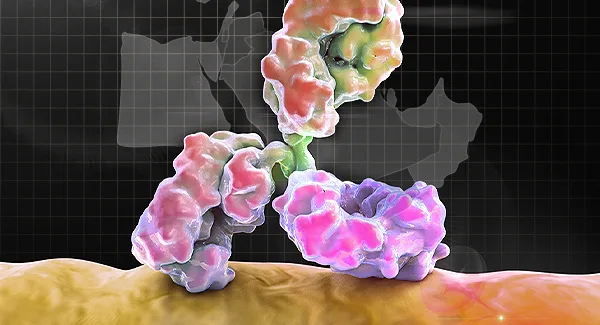
Rituximab works by binding to the CD20 antigen on B-cells, inducing cell death through mechanisms such as antibody-dependent cellular cytotoxicity (ADCC), complement-dependent cytotoxicity (CDC), and apoptosis. This targeted action reduces the proliferation of B-cells in conditions like lymphoma and autoimmune disorders.
Latest Developments
Hematologic Malignancies
Recent studies emphasize Rituximab’s efficacy in combination with newer agents. For example, combining Rituximab with Bruton’s tyrosine kinase (BTK) inhibitors in CLL has shown improved progression-free and overall survival rates. A 2022 study reported a 24-month progression-free survival rate of 89% with the combination therapy, compared to 72% with Rituximab alone. Maintenance therapy with Rituximab has also shown benefits, with the GALLIUM trial indicating a 3-year progression-free survival rate of 80% for patients with follicular lymphoma, compared to 73% for those without maintenance therapy.
Autoimmune Diseases
Rituximab remains a key therapy for RA, particularly in patients unresponsive to tumor necrosis factor (TNF) inhibitors. The REFLEX study demonstrated that 51% of RA patients treated with Rituximab achieved a 20% improvement in symptoms at 24 weeks, compared to 18% in the placebo group. Its effectiveness in granulomatosis with polyangiitis (GPA) and microscopic polyangiitis (MPA) has been supported by the RAVE trial, which showed a 64% remission rate at 6 months with Rituximab, compared to 53% with cyclophosphamide.
Biosimilars and Accessibility
The introduction of Rituximab biosimilars aims to reduce treatment costs and improve accessibility. Biosimilars like Ruxience have gained approval in various regions, offering comparable efficacy and safety profiles. A 2023 report highlighted a 30% reduction in the average treatment cost for Rituximab in Europe due to biosimilars.
Importance in the GCC Region
Healthcare Needs
The GCC region, including Oman, has seen an increase in hematologic malignancies and autoimmune diseases. According to the GLOBOCAN 2020 report, the annual incidence of non-Hodgkin’s lymphoma in the GCC is around 5,000 cases, many of which require Rituximab-based therapies. However, the high cost and logistical challenges of importing these medications limit their availability.
Secondary Packaging and Licensing Production
Establishing facilities for secondary packaging and licensing production of Rituximab within the GCC could be transformative. Secondary packaging involves repackaging bulk drug products into final containers for distribution, significantly reducing costs and ensuring a stable supply. Licensing production, where local manufacturers produce the drug under license, can further enhance accessibility and affordability. A 2021 report by Frost & Sullivan estimated that local secondary packaging could reduce drug costs by 20-30%, while licensing production could cut costs by up to 50%.
The Case of Oman
Current Challenges
Despite a well-developed healthcare infrastructure, Oman faces significant challenges in ensuring the availability of advanced biologics like Rituximab. The high cost of importing these medications often leads to limited stock and accessibility issues. The Oman Cancer Association reported that a single Rituximab treatment cycle can cost over $10,000, placing a significant financial burden on patients and the healthcare system. The lack of local production facilities exacerbates these issues, leading to treatment delays and suboptimal patient outcomes.
Potential Solutions
Establishing secondary packaging and licensing production facilities in Oman could address these challenges effectively. By reducing dependency on imports, Oman can ensure a consistent and affordable supply of Rituximab. Additionally, such initiatives would align with the GCC’s broader objectives to enhance regional pharmaceutical self-sufficiency. A 2023 feasibility study estimated that local production of Rituximab could save the Omani healthcare system up to $25 million annually, while also creating jobs and fostering economic growth.
Statistical Analysis and Economic Impact
Cost Analysis
The average cost of Rituximab therapy in the GCC is significantly higher than in regions with local production capabilities. In the U.S., the average cost of a single Rituximab treatment cycle is about $7,000, whereas in the GCC, it can exceed $12,000. This discrepancy is mainly due to importation costs, tariffs, and logistical expenses. Biosimilars have somewhat mitigated these costs, but the price remains prohibitive for many patients.
Economic Impact
The economic impact of establishing local secondary packaging and licensing production facilities for Rituximab in the GCC is substantial. A 2022 report by PwC Middle East indicated that local production could reduce the overall cost of Rituximab by up to 40%, translating to annual savings of approximately $50 million for GCC healthcare systems. Moreover, it highlighted potential job creation, estimating that the pharmaceutical manufacturing sector could generate over 1,000 direct and indirect jobs in the region.
Addressing the Healthcare Gap
Healthcare Access and Equity
Local Rituximab production could improve healthcare access and equity. In Oman, rural and underserved populations often face significant barriers to accessing advanced biologic therapies. By establishing local production facilities, the healthcare system can ensure a more consistent and equitable distribution of Rituximab, reducing disparities in treatment availability. A 2023 survey by the Oman Ministry of Health revealed that 35% of patients requiring Rituximab therapy experienced treatment delays due to drug shortages, underscoring the need for local production.
Strategic Benefits
Local production of Rituximab offers strategic benefits for the GCC region. By reducing dependency on international suppliers, the region can enhance its pharmaceutical self-sufficiency and resilience to global supply chain disruptions. The COVID-19 pandemic exposed vulnerabilities in global pharmaceutical supply chains, emphasizing the importance of regional production capacities to ensure the timely availability of essential medicines.
Future Prospects
Research and Development
Investing in local Rituximab production facilities opens avenues for research and development (R&D) within the GCC. Partnerships between local manufacturers, academic institutions, and international pharmaceutical companies can contribute to the global innovation landscape. Establishing R&D centers focused on biologics can facilitate the development of new therapeutic indications for Rituximab and the discovery of novel biologic agents. A 2022 report highlighted the potential for regional investment in this sector, with the global biologics market expected to grow at a compound annual growth rate (CAGR) of 9.6%, reaching $479 billion by 2028.
Regulatory Framework
Supporting local Rituximab production requires developing a robust regulatory framework to ensure the quality, safety, and efficacy of locally produced biologics. This includes harmonizing regulatory standards with international guidelines, such as those from the European Medicines Agency (EMA) and the U.S. Food and Drug Administration (FDA). A 2023 white paper recommended establishing a regional regulatory authority to oversee the approval and monitoring of biologic products, streamlining the regulatory process, and facilitating market access for local manufacturers.
Conclusion
Rituximab is pivotal in managing various hematologic and autoimmune diseases. Recent advancements and the advent of biosimilars have further solidified its importance in modern medicine. For the GCC region, and Oman in particular, improving accessibility to Rituximab through local production and secondary packaging facilities is crucial. This not only addresses immediate healthcare needs but also aligns with regional goals of pharmaceutical self-sufficiency and economic diversification. By investing in these initiatives, the GCC can ensure better healthcare outcomes for its population and reduce the economic burden associated with importing high-cost biologic therapies.
Explore the science driving Opal Biopharma’s breakthroughs in autoimmunity, cancer therapeutics, and diabetes care.